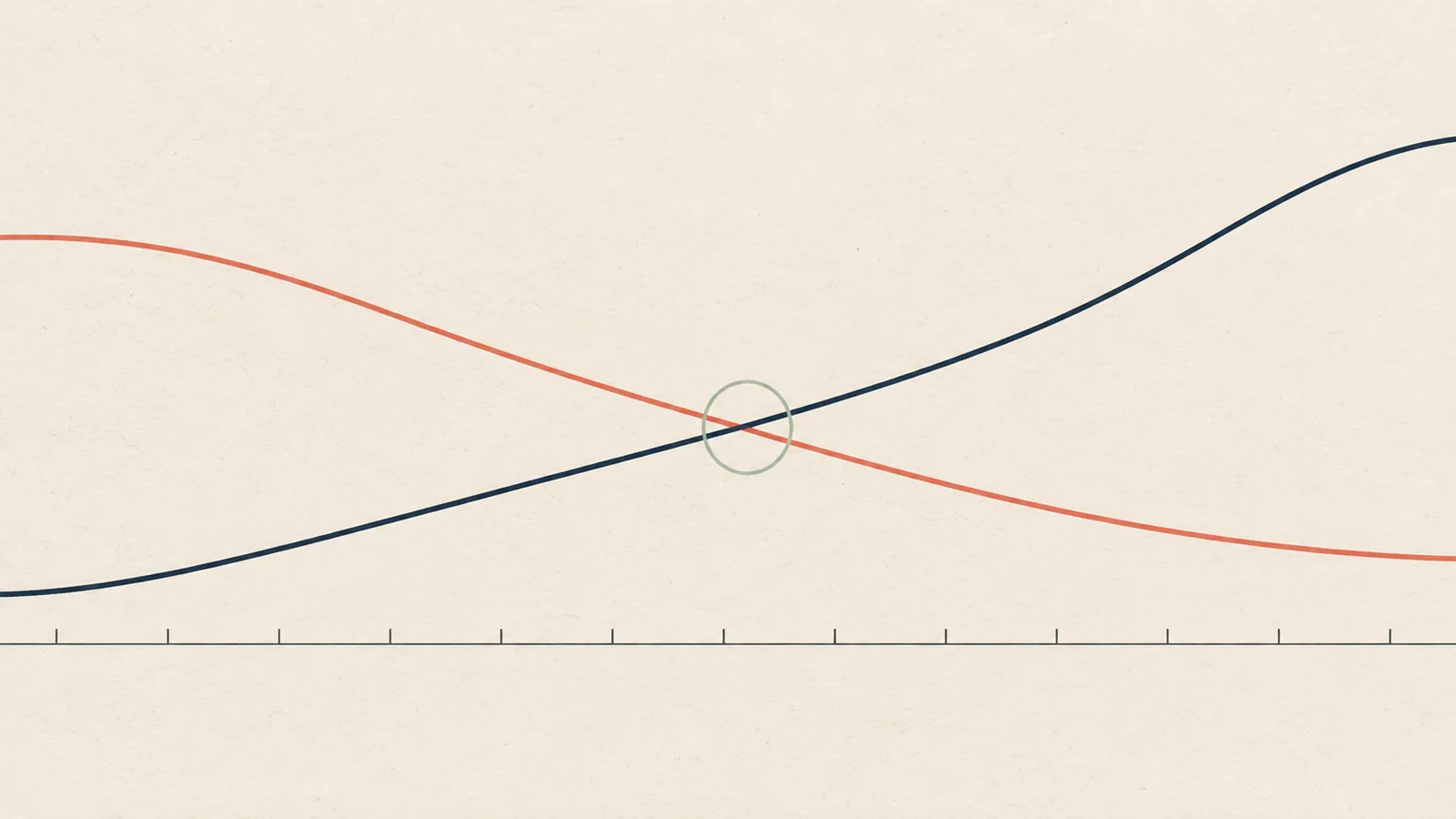
Ad creative fatigue is a useful description when repeated exposure to an ad appears to reduce audience response. It is not the only explanation for rising acquisition costs, and one frequency number cannot diagnose it by itself.
Before replacing a working concept, check whether the deterioration is in attention, traffic cost, the landing page, or the quality of inquiries. Each calls for a different response.
Identify which part of performance changed
Compare reasonably similar periods and keep the outcome definition consistent. Record audience, placement, budget, offer, and destination changes that could explain the shift.
Use the pattern as a starting hypothesis, not a verdict:
| Observation | What to investigate |
|---|---|
| Fewer clicks per impression | Message relevance, exposure, placement mix |
| Similar click response but higher click cost | Delivery cost and competitive conditions |
| Similar traffic but fewer accepted inquiries | Page behavior, offer, form, measurement |
| More inquiries but fewer qualified opportunities | Promise, audience fit, qualification process |
Do not treat all clicks as equally valuable. A provocative ad may attract curiosity without producing the kind of inquiry your business needs.
Review the concept, not just the artwork
Write down the ad's audience, problem, promise, proof, and requested action. A new background color with the same claim may be a cosmetic refresh rather than a new reason to pay attention.
For a hypothetical roofing-software campaign, the original concept might ask business owners whether they know their lead cost. A different concept could explain how to compare booked jobs with ad spending. Both serve the same product, but they enter through different business questions.
Keep claims grounded. Do not turn a new concept into a guarantee that the product will lower lead costs or identify every wasted dollar. Use approved product behavior and evidence you can support.

Build one test that answers one question
Choose whether you are testing the message, visual, format, or offer. If you change all four, the result can still inform a business choice, but it will not isolate which element mattered.
Google's experiment guidance recommends a defined hypothesis, limited variables, and success metrics chosen before the test. Those are useful planning principles even when your actual test runs on another platform. Google's experiment planning guide.
A specific hypothesis might be: “Showing the lead-to-job calculation will produce more qualified inquiries per dollar than asking a general awareness question.” That is more actionable than “the new design looks better.”
Use a supported experiment setup where feasible. Ordinary delivery across two ads may be uneven and should not automatically be described as a randomized A/B test.
Decide what evidence would justify a refresh
Look at the business outcome after allowing for the normal qualification or sales delay. If the refreshed ad attracts more clicks but fewer qualified prospects, it has not necessarily improved the campaign.
Keep the old concept and test notes in a library. Record audience, dates, spend, outcome definitions, and known limitations. An inconclusive test should remain inconclusive rather than being promoted into a “winning creative” claim.
There is no universal schedule that requires every ad to be replaced weekly. Refresh when the evidence or business message supports it, and continue checking that the destination remains accurate.
How Omesta helps with turning a creative diagnosis into a test
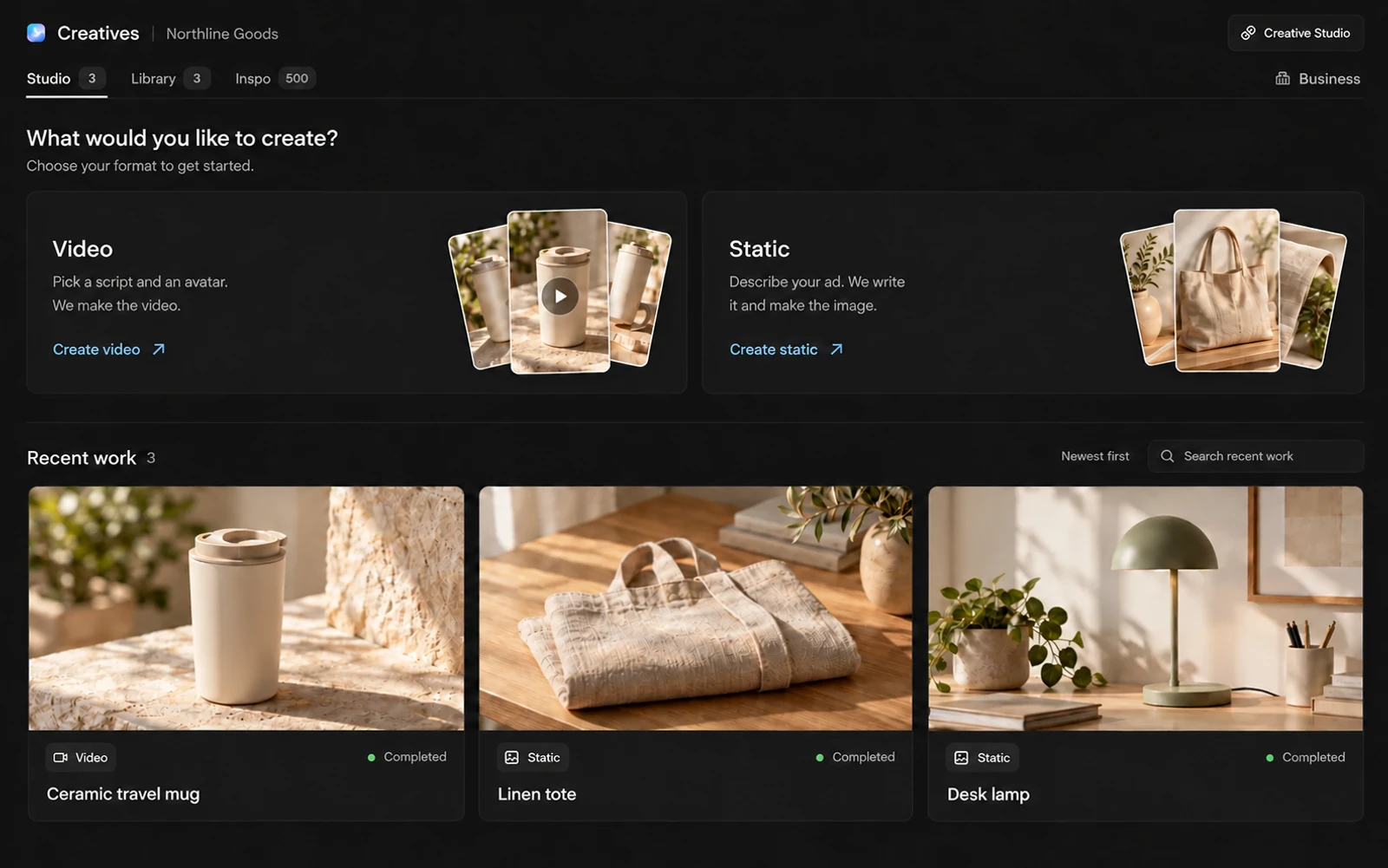
Use Omesta’s static and video creative workflows to prepare a new concept after you have identified a reason to test it. Keeping the brief and finished output together can help your team review whether the new version changes the intended message. Creative allowances depend on the plan, and a generated asset still needs your review before use.
Explore the AI ad-management workflow for current capabilities and the pricing page for plan limits.
Customer example: Pivot Point
Pivot Point’s existing case study records 101 registrations at $6.80 per registration from one Meta ad, reported in September 2026. That is one ad’s registration result, not a lifetime account total or proof of attendance or sales. Do not infer exact spend from the rounded cost per registration.
The result is useful customer context, but it does not establish that a creative refresh caused the outcome or show when fatigue began. Your test needs its own before-and-after evidence. This is an individual example, not a typical-result claim or guarantee.
Read the Pivot Point case study.
Frequently asked questions
What frequency proves an ad is fatigued?
No single number proves it across audiences and campaigns. Consider response trends, audience context, and business outcomes together.
Should I replace the image or the copy first?
Start with the most plausible issue. If inquiries misunderstand the offer, clearer copy may matter more than a new illustration. Test the hypothesis rather than choosing by habit.
Can a lower click-through rate still be acceptable?
Yes. A more selective message may generate fewer clicks but better-fit inquiries. Evaluate the whole path to the business outcome.
For measurement definitions, see our advertising metrics guide. You can explore Omesta before deciding how it fits your creative workflow.