
Choose static or video ads according to the explanation the customer needs and the placements you can serve well. A static image can communicate one clear idea quickly; video can show a sequence, demonstration, or spoken explanation. Neither format is universally more profitable.
Compare the complete creative and destination, not just the file extension. A strong static concept and a confusing video are not a controlled test of image versus motion.
Decide what must be understood
If the offer can be explained through a single visual and short headline, static may be an efficient starting point. If understanding depends on seeing a workflow or an observable change, video may add useful information.
Do not use motion merely to make the asset appear more sophisticated. Every extra second asks for attention. If the viewer can understand the message from the first frame, decide what the remaining sequence contributes.
Avoid fabricated product demonstrations. The screen, result, or customer scenario shown should accurately represent the thing being offered, with illustrative examples clearly distinguished from real outcomes.
Compare production and maintenance effort
| Consideration | Static | Video |
|---|---|---|
| Explanation | One principal composition | A sequence over time |
| Review | Copy, image, claim, crop | Those checks plus timing, audio, captions, continuity |
| Revision | Often a localized design change | May require multiple scenes or audio changes |
| Placement | Check supported dimensions and crop | Also check duration and interface-safe areas |
These are planning considerations, not universal cost estimates. A complex illustration can take more work than a simple authentic product recording.
Include the cost of updates. If the offer changes frequently, choose a production approach the team can keep accurate instead of leaving an impressive but obsolete asset running.

Match the placement deliberately
Meta's Reels guidance discusses vertical video, sound, and safe zones. Its published examples and studies should not be treated as a promise that video beats every image in every placement or business. Meta's Reels guidance.
Preview each actual delivery format. Text that is readable in the design file can be too small on a phone; an important product detail can disappear in a crop. Captions and on-screen meaning should support viewers who do not listen to the audio.
A repurposed horizontal recording is not automatically a good vertical ad. Recompose intentionally where needed and verify the final exported asset.
Test the message fairly
Keep the offer, audience, destination, and follow-up standard comparable. Decide whether you are testing format or two genuinely different creative concepts. Both can be useful tests, but they support different conclusions.
Measure the intended business outcome. Video views or image engagement can help diagnose attention, but they do not replace qualified inquiries and customers. Record production effort alongside acquisition results if the decision concerns the ongoing creative program.
When delivery is uneven or outcomes are sparse, avoid naming a universal winner. Use what you learned to improve the next creative brief, and preserve evidence about which message the audience understood.
How Omesta helps with testing the format the message needs
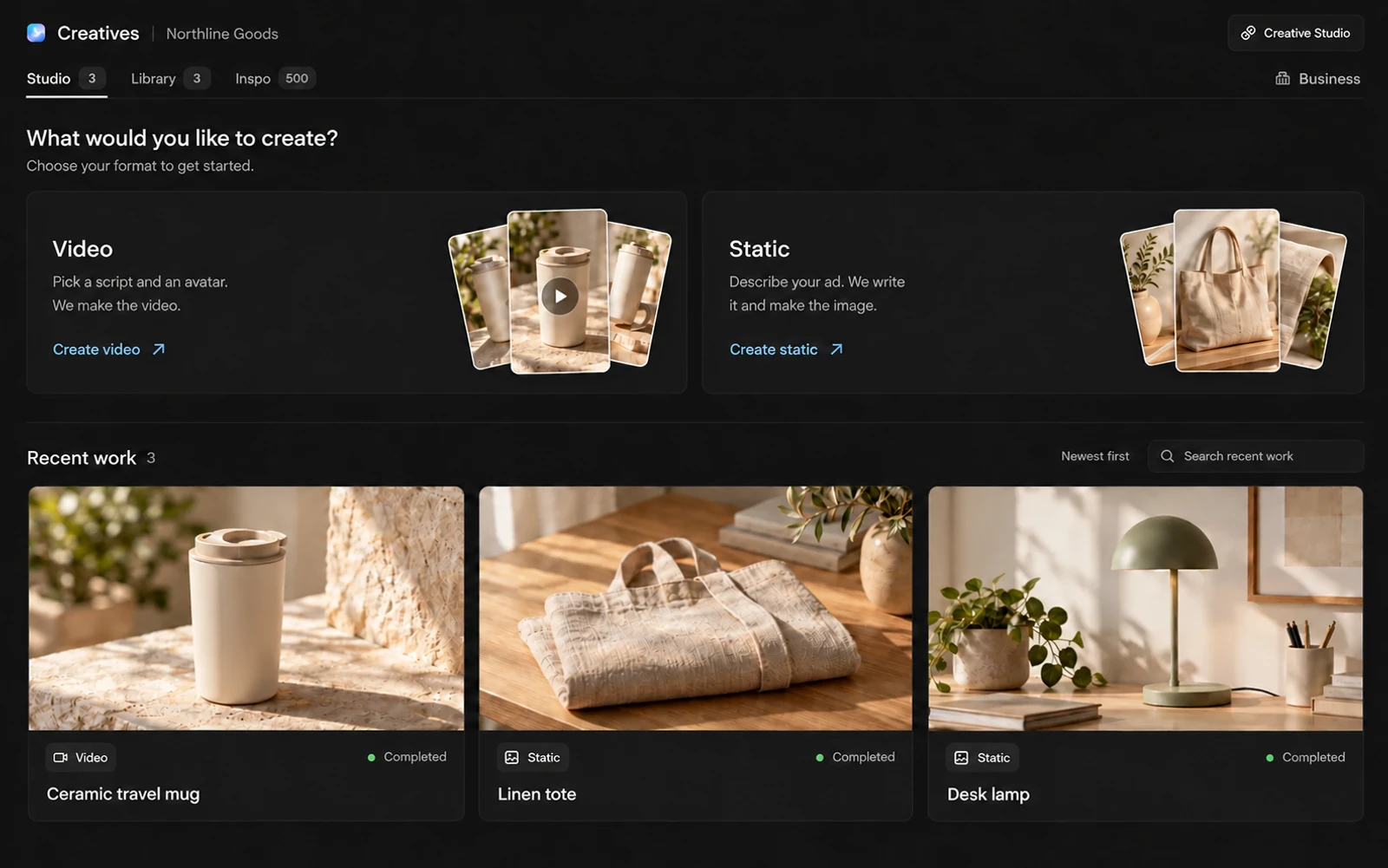
Use Omesta’s static and video creative workflows to prepare the formats appropriate to your test, subject to the plan’s allowances. Review whether each output communicates the same offer clearly before comparing results. The tool gives you a production workflow; it does not establish that video beats static or that every generated asset is ready to publish.
Explore the AI ad-management workflow for current capabilities and the pricing page for plan limits.
Frequently asked questions
Should every campaign include video?
Not automatically. Consider the message, placement, budget, and ability to produce a truthful, usable asset. A format requirement should serve the campaign rather than a trend.
Can I turn a static ad into a video?
Yes, but simple animation may not add meaningful explanation. Define what the motion should help the viewer understand before creating it.
Is a high video-view rate a lead-generation win?
It indicates the measured viewing behavior. Evaluate the next steps and qualified outcomes before treating attention as acquisition success.