
If you are comparing Hyros alternatives, start with the decision you cannot make today. Explaining which touchpoints receive conversion credit, estimating incremental sales, and operating advertising campaigns are different jobs. A replacement should solve your specific gap—not just show a different ROAS number.
Editorial review: October 22, 2026. This is a comparison based on vendors' public product descriptions, not a hands-on accuracy benchmark. Omesta publishes this article and is discussed separately below. Product availability, integrations, contracts and prices should be confirmed directly with each vendor.
A shortlist organized by the problem
- Northbeam: evaluate for multi-touch attribution, incrementality and media mix modeling across a marketing program.
- Triple Whale: evaluate for ecommerce measurement and reporting, with attribution, MMM and incrementality products.
- SegmentStream: evaluate for cross-channel measurement, marginal analytics and budget-allocation analysis.
- Omesta: evaluate separately if the main need is a workspace for connected ad reporting, creative production and supported campaign actions—not a claim of equivalent measurement capabilities.
These are evaluation categories, not a ranking or a claim that any platform produces more accurate results than another.
Northbeam: evaluate the measurement suite
Northbeam's product site describes a suite spanning multi-touch attribution, incrementality and media mix modeling. That makes it a candidate when your evaluation needs to cover more than a single attribution report.
Ask which products are included in the proposal, what data history they require, and how the team explains differences between its attribution and modeled results. Request a demonstration with the types of conversions your business actually uses. Do not assume support for your particular CRM, offline sales workflow or export requirements without checking them.

Triple Whale: evaluate ecommerce measurement and operations
Triple Whale's product site presents attribution, MMM and incrementality alongside a data platform, reporting and operational tools. Ecommerce teams can use that as a starting point for evaluating how store, advertising and business data fit together.
Ask how it handles your store setup, refunds, new versus returning customers and multiple brands. Request a clear breakdown of which capabilities belong to which plan. A wide feature list is not proof that the features your team needs are included or that a migration will be effortless.
SegmentStream: evaluate measurement and allocation
SegmentStream's product site describes cross-channel attribution, incrementality testing, marginal analytics and automated budget allocation. It also describes integrations with advertising and business-data sources.
Ask how recommendations are derived, what data coverage is required, and whether changes are recommendations or executable actions. Confirm review and approval controls, implementation responsibilities and the evaluation period. Modeled outputs and experiments answer different questions; ask the vendor to explain which result is being presented.
Where Omesta fits—and where it does not
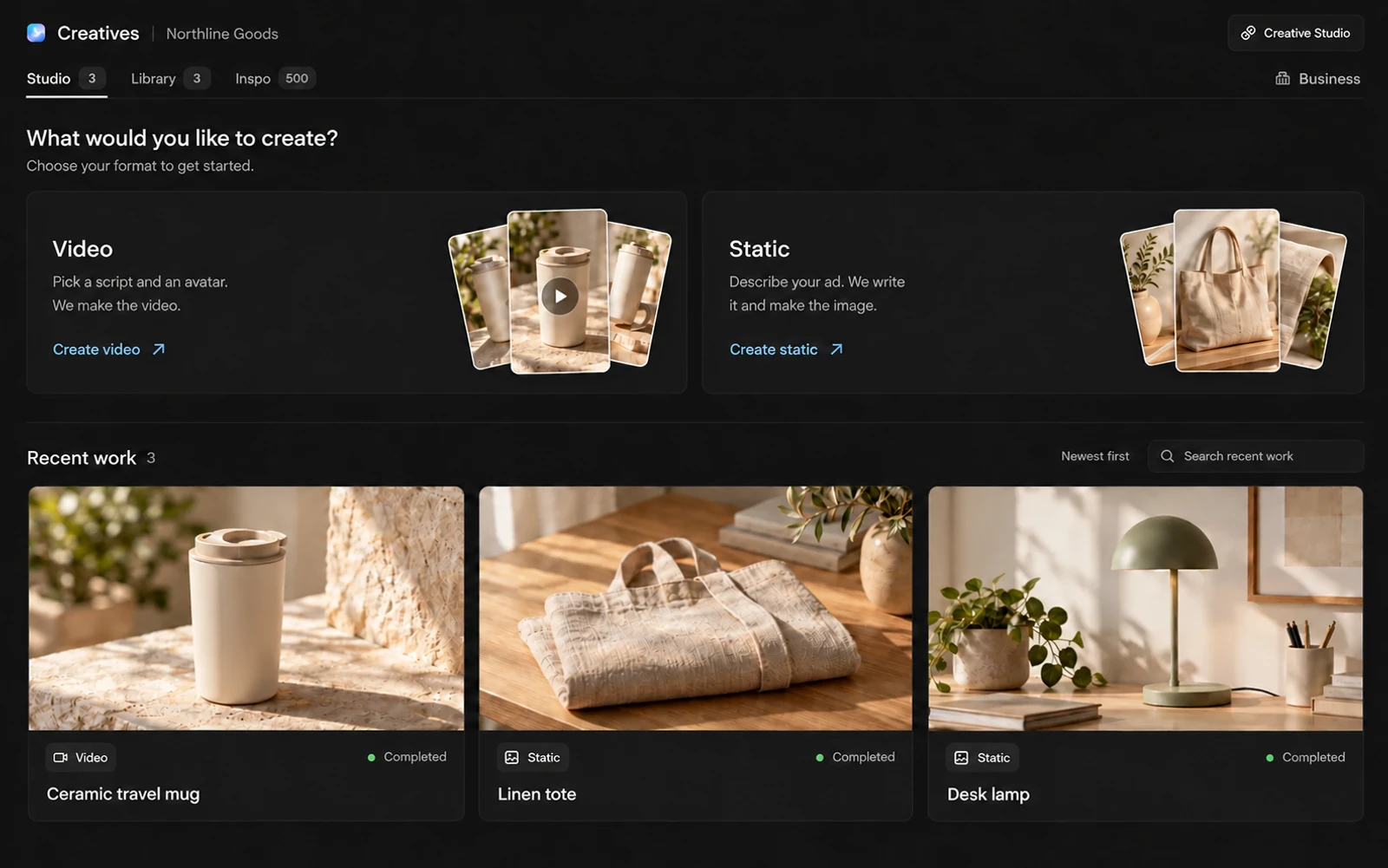
Omesta is an advertising workspace for connected Meta and Google performance, creative production and supported campaign operations with account-level controls. See the current product overview, integrations and plans.
Do not select Omesta on the assumption that it replaces a dedicated incrementality study, media mix model or every attribution feature in another platform. Start with the workflows you need to operate. If your main gap is measurement methodology, evaluate the relevant specialist product directly.
Build a comparison your team can actually use
- Define one unresolved question. For example: which campaigns create qualified customers rather than inexpensive forms?
- List required data. Name ad accounts, stores, CRM stages, call outcomes, currencies and historical periods. Mark each integration as confirmed, unconfirmed or unavailable.
- Write down attribution rules. Include lookback windows, modeled versus observed conversions, view-through credit, timezones and new-customer definitions.
- Test reconciliation. Trace a small permitted sample of your own conversions from the source system into the reporting tool. Check duplicates, cancellations and refunds. Share customer data only through approved channels.
- Check economics and control. Compare the full contract cost, implementation effort, data export options, cancellation terms and permissions for any automated changes.
- Decide what would count as success. Agree on a measurable reporting or operating improvement before switching. A larger attributed-revenue number is not, by itself, new revenue.
Keep the old reporting view available during a permitted comparison period. Record methodology differences before changing budgets based on a new dashboard. Our CPC, CPM and CPA guide helps keep cost definitions consistent.
Frequently asked questions
What is the best Hyros alternative?
There is no universal winner. Shortlist based on your business model, required integrations, measurement question, implementation capacity and total cost. Verify the exact features you need rather than relying on a general ranking.
Does attribution prove that an ad caused a sale?
No. Attribution assigns credit under a defined model. Estimating what would have happened without advertising requires a different measurement approach, such as an appropriately designed incrementality experiment. Ask vendors to distinguish the two.
Should I switch because another dashboard reports higher ROAS?
Not on that fact alone. Different windows, models and conversion definitions can change credited revenue without changing the underlying business. Reconcile definitions and compare business outcomes before treating the difference as improved performance.
Sources and review scope
Vendor descriptions linked in each section were checked on October 22, 2026. The selection questions and fit assessments are Omesta's editorial guidance. No competitor accuracy percentages, unverified spending minimums or unsupported price comparisons are used.