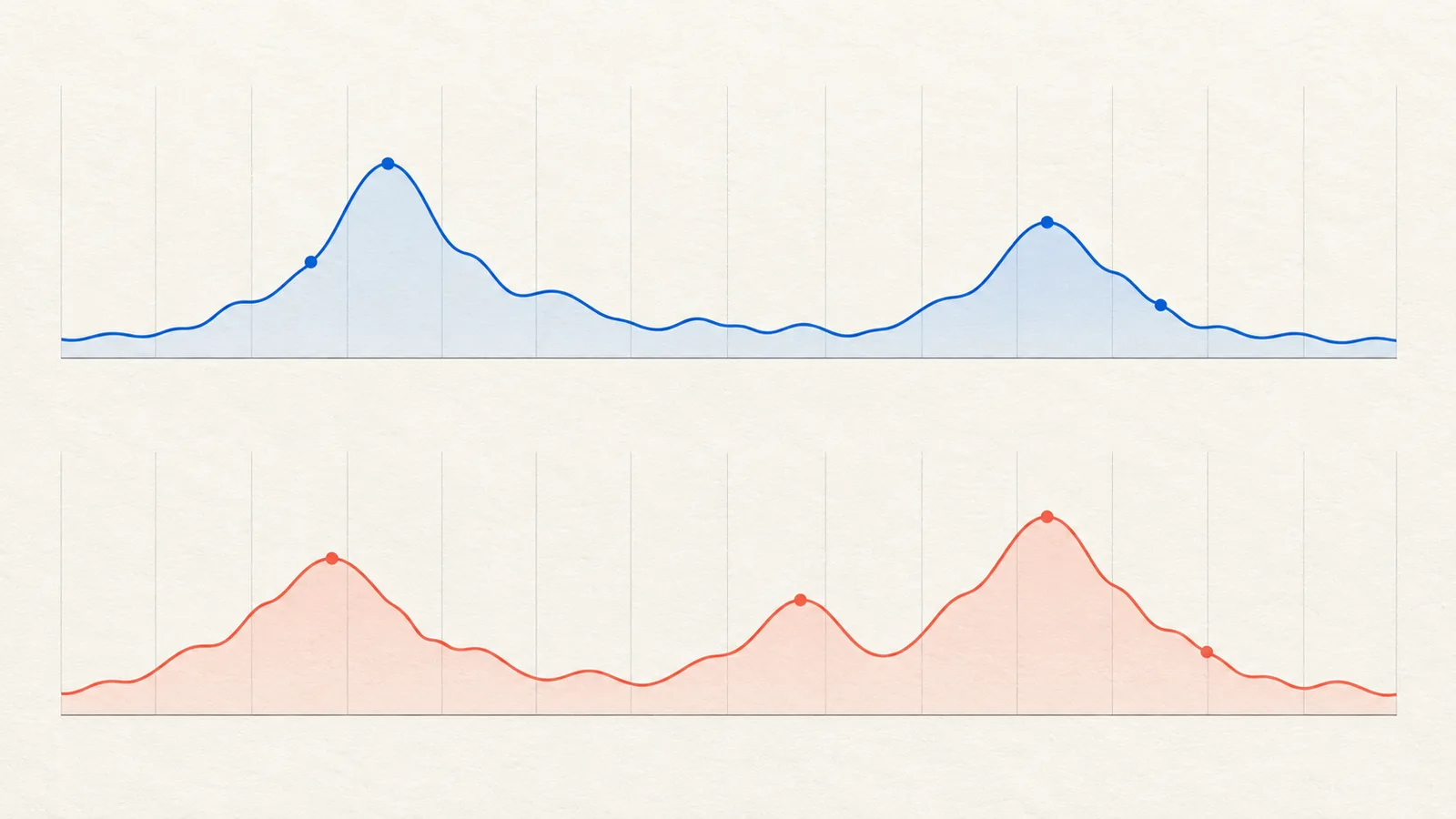

Recent ad results can look worse before all outcomes arrive. Separate the time a person takes to act, the time your team takes to qualify the inquiry, and the time a reporting system takes to process it. Those are three different delays.
This does not mean every weak campaign needs more time. A broken destination or an unauthorized spending increase requires action even while conversion reporting remains incomplete.
Identify which clock is running
| Delay | Example | Investigation |
|---|---|---|
| Customer decision | A visitor returns days after the first click | Observe the acquisition cohort over time |
| Business processing | A request waits for qualification | Check review ownership and workload |
| Reporting processing | A recorded event appears later in a platform | Check diagnostics and update timing |
| Missing event | No accepted record or expected event exists | Test the implementation rather than wait |
Google describes conversion lag as the time between an interaction and a conversion, and explains that recent CPA or ROAS can change as conversions arrive. Its lag reporting is useful context, not a guarantee that a particular campaign will recover. Google's conversion-lag guidance.
Compare cohorts at similar ages
Suppose a hypothetical campaign spends $600 and has six qualified inquiries after two days. The observed cost is $100 each. If six more inquiries from that same acquisition cohort qualify later, the completed figure becomes $50, assuming the spend basis stays the same.
The example illustrates timing; it does not predict that your count will double. Do not insert expected future conversions into a report as though they already happened.
Compare recent cohorts with earlier cohorts at the same stage of maturity. A two-day-old cohort and a fully reviewed month are not equally complete. Label the date through which outcomes have been collected and any known backlog in the sales review.

Choose a review window from your own process
Look at how long typical inquiries take to be received, assessed, booked, and converted into customers. Use that operating history to decide which measures are useful daily and which need a longer review window.
Daily checks can still verify destination availability, unexpected spend, and successful intake. Qualified-customer comparisons may need more time. The one-bad-day checklist separates immediate failures from noisy performance changes.
Avoid announcing an arbitrary universal waiting period. Different services have different decision cycles, and a new offer may not behave like an established one.
Keep estimates and observations distinct
If you forecast outcomes, label the forecast, its assumptions, and its source. Maintain the observed count beside it. A forecast can help planning, but it should not silently replace actual results in an approval decision.
When the delay comes from a broken CRM handoff, repair that boundary and document which records may be missing. Replaying events without checking prior delivery can create duplicates. Establish what succeeded before retrying anything.
After the cohort matures, revisit the decision. Was the early concern a reporting-timing issue, or did poor qualification persist? Record the answer so future reviews are based on the business's evidence rather than an optimistic habit of waiting.

How Omesta helps with avoiding decisions from incomplete results
Use enabled account reviews to revisit a finding as more evidence arrives, with the reporting period still in view. Recent reporting improvements distinguish unavailable measurements from valid observations. This helps your team ask whether a result is immature or missing before approving a supported change. It does not predict how many conversions will arrive later.
Explore the AI ad-management workflow for current capabilities and the pricing page for plan limits.
Frequently asked questions
Does conversion lag explain every sudden drop?
No. Check tracking, intake, eligibility, spending, and site changes. Lag is one hypothesis, not a default explanation.
Should I stop looking at daily results?
No. Use daily checks for operational health and risks, while interpreting outcome ratios according to their completeness.
Can I compare campaigns with different sales cycles?
Yes, but use clearly defined cohorts and appropriate outcome windows. A raw same-day comparison can favor the faster process even when later results differ.